




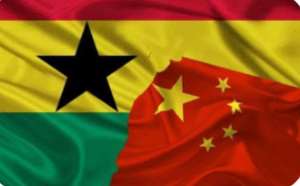
As African countries seek to reduce their reliance on the US dollar, China is steadily expanding the international use of the yuan, creating new opportunities but also new questions about financial dependence.
Ghana is increasingly part of this shift. Stanbic Bank Ghana has become the first bank in the country to offer direct yuan settlement through China's Cross-Border Interbank Payment System (CIPS), allowing customers to make RMB payments directly to Chinese counterparties.
The move follows China's authorisation of Standard Bank and the Industrial and Commercial Bank of China (ICBC) to establish an RMB clearing structure covering 19 African countries. Standard Bank says it has processed more than CNY8 billion, or about US$1.2 billion, through CIPS across Africa.
For Ghanaian businesses trading with China, the benefits are clear. Direct yuan payments can reduce transaction costs, eliminate some intermediaries and potentially lower foreign-exchange expenses. With Ghana-China trade reaching a record US$14.1 billion in 2025, China is Ghana's largest trading partner, making the yuan increasingly relevant to the country's commercial activity.
But the expansion of the yuan goes beyond cheaper payments. It is becoming part of a wider financial architecture linking China to Africa.
For Beijing, greater international use of the currency can reduce reliance on financial systems dominated by the United States, strengthen China's position in global trade and deepen the financial networks surrounding Chinese investment and commerce.
The concern for African countries is not that using the yuan automatically threatens monetary sovereignty. The risk is cumulative. If countries increasingly trade, borrow, hold reserves and service debt in yuan, decisions affecting Chinese financial markets and RMB liquidity could eventually have a greater impact on their economies.
Other African countries illustrate both the opportunities and risks. Zambia has accepted certain mining taxes and royalties in yuan, while Kenya converted a US$5 billion Chinese railway loan from dollars into yuan, reducing debt-servicing costs and providing short-term budgetary relief. Yet such moves can also increase exposure to the yuan and to China's financial system.
For Ghana, the issue is particularly important because financial dependence cannot be separated from the underlying structure of trade. Ghana exports commodities such as cocoa, gold and oil while importing large volumes of manufactured goods, machinery and industrial products from China.
Settling more of this trade in yuan may make transactions easier, but it doesn't by itself change an economic relationship in which Ghana largely exports raw materials and imports higher-value manufactured goods.
That is why Finance Minister Dr Cassiel Ato Forson has argued that Ghana's relationship with China must move towards local processing, manufacturing, technology transfer and job creation. The central question is not simply whether Ghana trades in dollars or yuan, but whether its relationship with China helps build productive capacity at home.
China's decision to grant zero-tariff access to products from 53 African countries, including Ghana, could provide an opportunity to expand exports. But tariff-free access alone will not transform Ghana's trade structure. Local producers still face constraints involving production capacity, international standards, certification, logistics and knowledge of the Chinese market. Without greater domestic value addition, Ghana risks exporting more unprocessed commodities while importing more finished goods.
Debt presents another vulnerability. Ghana has recently undergone a major debt restructuring, while Chinese lenders remain important creditors.
Yuan-denominated financing could sometimes be cheaper than dollar borrowing, but it introduces currency risk. If the cedi weakens against the yuan, the domestic cost of servicing yuan-denominated debt could rise.
The lesson is therefore not that Ghana should reject Chinese financial integration.
China is too important to Ghana's trade, investment and industrialisation ambitions for disengagement to be realistic. Instead, Accra needs to ensure that greater use of the yuan forms part of a broader diversification strategy.
Diversification means maintaining multiple financial and trading options, rather than replacing dependence on one dominant currency with dependence on another. Ghana should engage China, but negotiate for arrangements that promote local value addition, technology transfer, employment and industrial development while preserving financial flexibility.
The yuan's growing role in Africa marks a new phase in China's economic engagement with the continent. Its benefits are real, particularly for countries seeking cheaper and more efficient alternatives to dollar-based transactions. But alternatives should not become dependencies.
Ghana is not currently trapped in a yuan-based monetary system, and access to CIPS does not, by itself, represent a loss of monetary sovereignty. The strategic question is what comes next.
If expanding yuan settlement is accompanied by rising yuan-denominated debt, greater Chinese financial exposure and persistent trade imbalances, Ghana could gradually exchange one form of external vulnerability for another.
The choice before Accra, therefore, is not simply between the dollar and the yuan. It is between dependence and genuine diversification. Ghana should deepen its engagement with China but on terms that strengthen Ghanaian industry and give the country greater economic leverage.
Africa should not replace one dependence with another. It should build the productive and financial strength needed to negotiate with both on more equal terms.
Mustapha Bature Sallama
Medical/Science communicator, Private Investigator, Criminal Investigation and Intelligence Analysis,United States Institute of Peace (USIP), [email protected] +233555275880
Sources
Ghanaian Times, "Stanbic Bank becomes first bank in Ghana to offer direct Chinese Yuan settlement" https://ghanaiantimes.com.gh/stanbic-bank-becomes-first-bank-in-ghana-to-offer-direct-chinese-yuan-settlement/
BusinessDay, "Africa embraces yuan payments as Standard Bank clears $1.2bn through China's network" https://businessday.ng/africa/article/africa-embraces-yuan-payments-as-standard-bank-clears-1-2bn-through-chinas-network/
Ghanaian Times, "Ghana–China Trade Hits $14.1 Billion Milestone" https://ghanaiantimes.com.gh/ghana-china-trade-hits-14-1-billion-milestone/
FurtherAfrica, "Zambia Embraces Yuan for Mining Taxes" https://furtherafrica.com/2026/01/05/zambia-yuan-mining-taxes-resource-finance/
Africa Defense Forum, "Kenya Feels Financial Squeeze of China's Standard Gauge Railway Loans" https://adf-magazine.com/2025/10/kenya-feels-squeeze-of-chinas-railway-debt-trap/
Graphic Online, "Ghana, China trade relations must shift to value addition Dr Ato Forson" https://www.graphic.com.gh/news/general-news/ghana-news-ghana-china-trade-relations-must-shift-to-value-addition-dr-ato-forson.html


 Trump signs order to rename Lake Ontario to 'Lake America' as Carney pushes back
 Police restrict concrete mixer trucks on Accra, Tema roads from August 28
 Supreme Court nominee Anthony Forson Jnr. opposes proposal to cap number of just...
 Justice Bernasko Essah explains why Supreme Court may depart from its previous d...
 Two NDC MPs whose ‘secret’ marriages have shocked Ghanaians
 All you need to know about Hon. Millicent Yeboah-Amankwa, wife of Hon. Mahama Ay...
 ‘A true trailblazer and cultural icon’ – Bawumia mourns Grace Nortey
 Vetting: 'Suspects should sue police if detained beyond 48 hours' - Supreme Cour...
 Speaker Bagbin outdoors uniforms for new parliamentary security guards
 Minority NPP boycotts vetting of three Supreme Court nominees over rushed timeta...

