




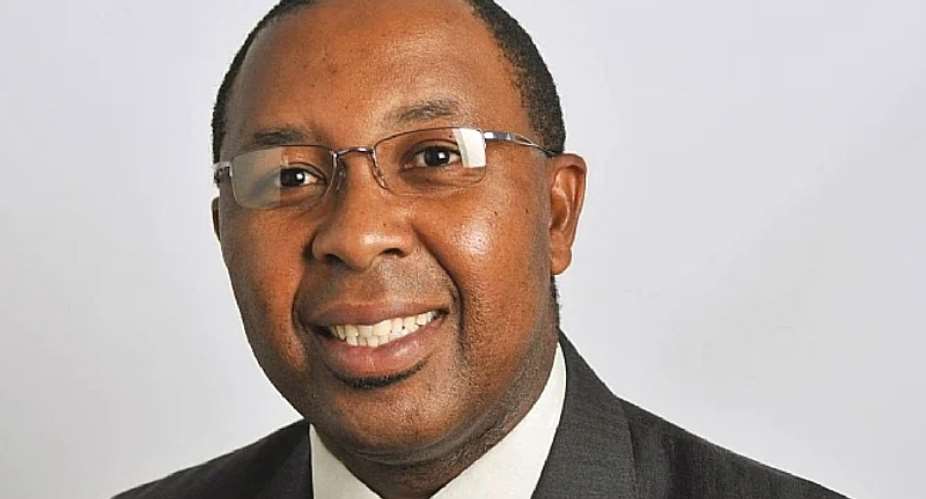
Let me start with a number that will make your eyes water. One hundred and forty-eight million rand. That is approximately 9 million dollars. That is what Absa paid its new chief executive, Kenny Fihla, in 2025 as reported by Accra Street Journal . And more than 43 percent of shareholders, nearly half of the people who own the bank, just voted against the remuneration report that disclosed that figure. That is not a small protest. That is one of the most significant shareholder rebellions seen in South African banking in recent years. The question is not just whether Fihla is worth the money. The question is whether Absa's board has lost the trust of its own owners.
Let me break down what happened and why it matters, not just for South Africa, but for the entire continent's banking sector.
The backlash erupted at Absa's annual general meeting, where 43.37 percent of shareholders voted against the implementation report detailing how the bank applied its remuneration policy during the financial year. Under South African governance rules, a vote of 25 percent or more against a remuneration resolution obliges the company to engage with dissenting shareholders and address their concerns. Absa has crossed that threshold by a wide margin. The board now has work to do.
At first glance, the remuneration figure appears extraordinary. According to Absa's disclosures, Fihla received total remuneration of roughly 9 million dollars in 2025. But the vast majority was not salary. The package included a once-off compensation award of approximately 5.9 million dollars designed to replace long-term incentives and deferred awards he forfeited when leaving Standard Bank to join Absa. His fixed remuneration amounted to roughly 380,000 dollars. The remainder comprised annual incentives, share-based awards, and other executive compensation.
That distinction has become central to the debate. Absa argues that replacing forfeited incentives is standard practice when recruiting senior executives from competitors. The bank says it was necessary to attract one of the banking industry's most sought-after leaders. Fihla was not just any hire. Before joining Absa, he headed Standard Bank's corporate and investment banking division, widely regarded as one of the continent's strongest banking franchises. His arrival was seen as a statement of intent from Absa, which has spent years trying to accelerate growth, strengthen profitability, and improve its competitive position across African markets.
Investors, however, appear to be questioning whether the size, timing, and structure of the award were appropriate, particularly before shareholders have had an opportunity to assess the long-term impact of Fihla's leadership. He joined the bank, and then immediately received a massive pay package. Shareholders have not yet seen what he can deliver. They are being asked to trust the board's judgment. Nearly half of them are saying, "Not yet."
The shareholder revolt reflects a broader concern than executive compensation alone. At stake is Absa's strategy of rebuilding its leadership bench through aggressive recruitment from rivals as it attempts to narrow the performance gap with South Africa's biggest banking groups. The bank has defended the costs associated with attracting senior talent, arguing that these investments should ultimately generate stronger performance, better productivity, and long-term shareholder value. The vote suggests many investors want clearer evidence that the benefits will justify the expense.
This is not just a South African story. Executive pay in African banking has been rising. As banks expand across the continent, they compete for a limited pool of experienced executives. The talent wars are real. But so are the governance concerns. Shareholders are increasingly unwilling to accept large pay packages without clear links to performance. The Absa vote is a warning to every bank board on the continent. If you overpay, or if you fail to communicate effectively, your owners will push back.
The outcome is significant because large shareholder rebellions remain relatively uncommon among major African financial institutions. Institutional investors across South Africa have become increasingly vocal on governance issues, particularly executive remuneration, board accountability, and capital allocation. The Absa vote reflects a growing willingness among shareholders to challenge boards when they believe pay outcomes are running ahead of performance or are insufficiently aligned with investor interests.
While the vote does not overturn the remuneration already awarded, it sends a powerful signal to the board that a substantial proportion of investors are dissatisfied with how executive rewards are being structured and communicated. For Absa, the challenge now is not simply defending the package awarded to its chief executive. It is convincing investors that its expensive investment in leadership talent will ultimately translate into stronger earnings, improved returns, and a more competitive banking franchise across Africa.
The controversy has therefore become about far more than one executive's pay packet. It is about whether Absa's board understands the mood of its shareholders. It is about whether the bank can justify its strategy of expensive talent recruitment. And it is about whether African institutional investors will continue to accept the status quo or will demand more accountability. The 43 percent says they will demand more.
For Kenny Fihla , the pressure is now immense. He must deliver. If Absa's performance improves significantly under his leadership, investors may eventually accept that the expensive recruitment was justified. If performance stagnates, the rebellion will grow. The next annual general meeting will be even more contentious.
For the broader African banking sector, the lesson is clear. The era of unquestioned executive pay is ending. Shareholders are watching. They are voting. And they are not afraid to say no. The Absa vote is not an outlier. It is a signal. The question is whether other banks will listen before they face their own rebellions. The answer will determine the future of corporate governance in African banking. And that future is arriving faster than many boards expected.
Fact-Checked: Accra Street Journal

 GJA Applauds Ghana’s Sharp Rise in Global Press Freedom Rankings
 US Embassy Cautions Against Censorship in Fight Against Misinformation
 Interior Minister Blames Weak Enforcement by Assemblies After Avenor Building Co...
 Gov’t Warns Against Rising Misinformation, Calls for Stronger Journalistic Stand...
 Ramaphosa Warns Against Vigilante Crackdowns on Foreign Nationals
 Global InfoAnalytics Boss Rejects Claims Polls Are Destabilising NDC
 Bawumia to Propose Policy Alternative as Cocoa Sector Tensions Deepen
 ECG Announces Scheduled Outages and Technical Fault Affecting Multiple Regions o...
 Investigation committee uncover GH¢19.5m loss at Bolgatanga Technical University...
 Afenyo-Markin calls for protection of journalists, warns against suppression of ...


