



Ghana is steadily reshaping the global narrative on waste management, as community-driven solutions in the capital gain international recognition and delivers measurable environmental and economic benefits.
In a significant milestone, United Nations recently named Accra among 20 cities and countries making progress toward zero waste during the observance of International Zero Waste Day. The recognition highlights the growing impact of the Zero Waste Cities Project, led by the Green Africa Youth Organisation and its partners.
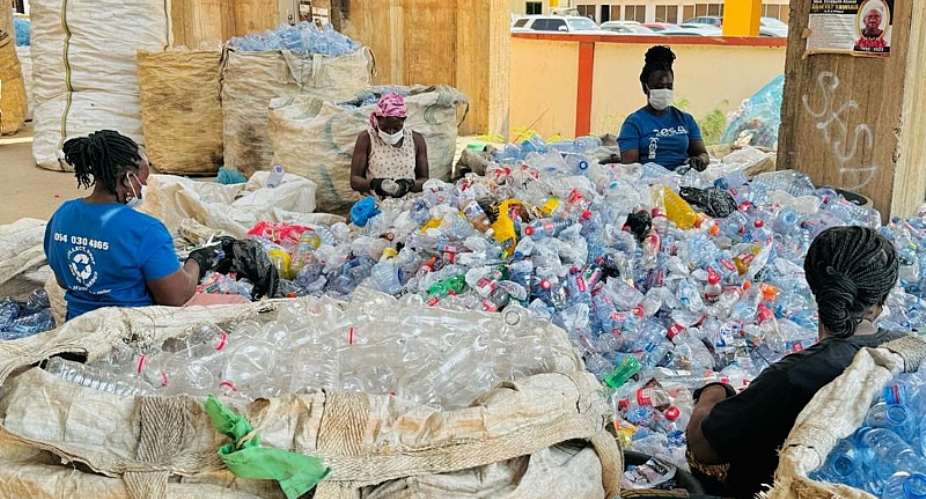
Implemented since 2021, the initiative is demonstrating that local solutions can effectively address urban waste challenges. The project has diverted over 65 tonnes of organic waste annually from landfills and recovered more than 288 tonnes of plastic from coastal and urban areas. It has also supported over 100 young people into green enterprises while providing compost to 120 farmers.
Turning Waste into Opportunity
At the community level, the project is transforming lives and livelihoods. In La, a suburb of Accra, a decentralized composting system anchored at a Material Recovery Facility is converting food waste into organic fertilizer. Farmers such as Mr. Boadi report significantly improved yields after switching from chemical fertilizers to compost derived from urban waste.
Accra generates approximately 3,000 metric tons of waste daily, nearly half of which is organic. When improperly disposed of, this waste produces methane a potent greenhouse gas. According to the Intergovernmental Panel on Climate Change, methane traps over 80 times more heat than carbon dioxide over a 20-year period.
The project demonstrates that simple interventions like waste separation and composting can reduce landfill methane emissions by up to 62 percent, offering a practical climate solution already in motion.
Data, Awareness, and Community Action
Beyond waste recovery, the initiative is building a data-driven environmental management system. It has deployed 150 air quality monitors across 29 municipal assemblies and trained 57 waste workers as environmental champions, significantly improving awareness of methane mitigation practices.
Community engagement remains central. More than 20,000 residents have been reached through awareness campaigns, while 443 participants have taken part in clean-up exercises, collecting over two metric tons of plastic waste.
Recognising Informal Waste Workers
A key pillar of the project is the inclusion of informal waste workers, who play a critical yet often overlooked role in urban sanitation. Through GAYO’s efforts, these workers are being organised, trained, and supported to advocate for better wages, safer working conditions, and formal recognition within Ghana’s waste management system.
Their integration is seen as essential to building a sustainable and inclusive circular economy.
Funding Gaps Persist
Despite its success, the project highlights a major global imbalance in climate financing. Only 1 percent of methane-related funding is directed toward organic waste management, while the majority supports waste-to-energy incineration technologies.
The Zero Waste Cities Project has received backing from partners including the United Nations Development Programme, Global Methane Hub, Clean Air Fund, and the Earthshot Prize, alongside technical support from Global Alliance for Incinerator Alternatives.
A Model for Replication
The project has also produced a “Zero Waste Playbook,” a practical guide co-developed with 46 stakeholders across government, academia, and civil society. Five municipal assemblies in Ghana have already adopted the framework, signalling its potential for nationwide scale-up.
Collaborating institutions include Kwame Nkrumah University of Science and Technology and University of Ghana, alongside private sector actors and waste worker associations.
A Shift in Narrative
The progress in Accra challenges long-standing perceptions that waste management solutions must be imported into developing countries. Instead, Ghana’s experience shows that locally driven systems grounded in community participation and practical innovation can deliver sustainable results.
As momentum builds, stakeholders say the focus must now shift toward increased investment to expand and sustain these initiatives.
“Ghana does not need to be saved from its waste,” the report emphasizes. “It needs the investment to scale what is already working.”
The Zero Waste Cities Project stands as a growing example of how grassroots innovation can shape national climate action while improving livelihoods and protecting the environment.

 Improved economy justifies purchase of new presidential jet – Toobu
 Eight Ghanaian seafarers return home after months in Iranian detention
 No one will be allowed to mess around with a Ghanaian and get away with it – Abl...
 Exim Bank case: Wontumi offers GH¢25m to secure end to prosecution
 Gov't finds $60.68m for presidential jet despite cost-of-living concerns – Abu J...
 Mahama orders performance assessment of all 261 MMDCEs
 Fire kills one, destroys over 100 wooden structures at Circle–Avenor settlement
 Customs orders strict enforcement of permit requirement for right-hand steering ...
 Fitch Solutions projects cedi will weaken to GH¢12.40 against dollar in 2027
 I think Mahama done better than the first term – Archbishop Agyinasare


