




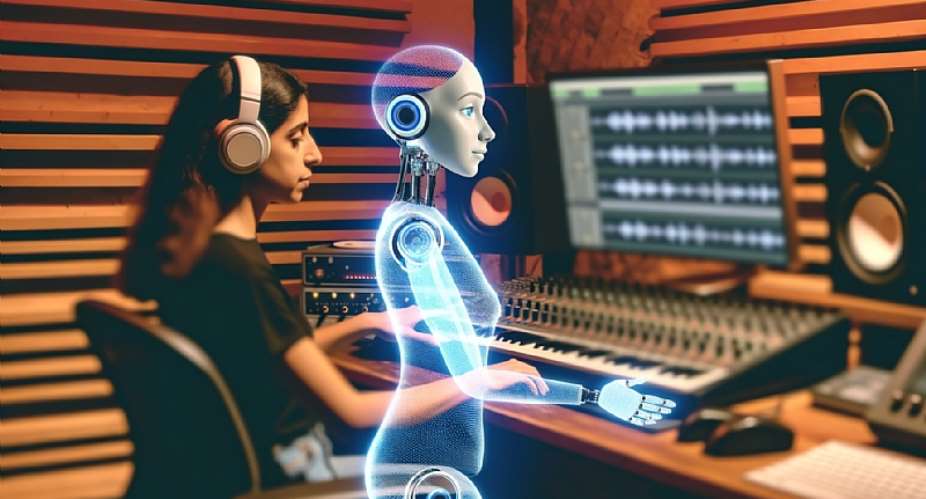
2026, artificial intelligence (AI) has become one of the most influential forces shaping the global music industry. From how music is created and distributed to how it is marketed and consumed, AI technologies are transforming long-standing practices. While these changes bring exciting opportunities for artists, producers, and listeners, they also raise serious concerns about creativity, ownership, and the future of human musicianship. The impact of AI on music in 2026 can best be understood by examining both its positive and negative effects.
The Positive Impact of AI on the Music Industry
One of the greatest benefits of AI in music is increased accessibility. AI-powered tools now allow independent artists, including those without formal training or expensive studio access, to produce high-quality music. With AI-assisted composition software, virtual instruments, and automated mixing and mastering, musicians can create professional-sounding tracks from their homes. This has helped democratize music production and opened doors for talent from underserved communities around the world.
AI has also enhanced creativity rather than replacing it in many cases. Artists use AI as a collaborative tool to generate melodies, harmonies, and rhythms that inspire new ideas. In 2026, AI is commonly used to analyze an artist’s style and suggest creative directions, helping musicians overcome creative blocks and experiment with new genres. Producers and composers for films, games, and advertisements rely on AI to quickly generate draft soundtracks, saving time while still allowing human refinement.
In music distribution and marketing, AI has improved efficiency and audience reach. Streaming platforms use AI algorithms to recommend songs tailored to listeners’ tastes, helping artists reach fans who might never have discovered their music otherwise. AI-driven data analysis also helps record labels and independent artists understand audience behavior, plan tours, and design targeted promotional campaigns.
The Negative Impact and Growing Concerns
Despite its benefits, AI’s rapid expansion in the music industry has raised serious ethical and economic concerns. One major issue is the threat to musicians’ livelihoods. In 2026, AI-generated music is increasingly used in background soundtracks, commercials, and online content because it is cheaper and faster to produce. This reduces job opportunities for human composers, session musicians, and producers, especially in entry-level and commercial work.
Another significant concern is copyright and ownership. AI systems are often trained on vast amounts of existing music, sometimes without the clear consent of artists. This has led to disputes over whether AI-generated songs infringe on original works or unfairly benefit from human creativity. Many artists worry that their unique styles can be replicated by AI without credit or compensation, weakening the value of originality.
Authenticity is also a growing issue. In 2026, AI can imitate the voices and styles of famous musicians with alarming accuracy. While some see this as technological innovation, others view it as a threat to artistic identity and trust. Fans may struggle to distinguish between human-created and AI-generated music, raising questions about honesty, transparency, and emotional connection in art.
Finding Balance in the Future
The future of music in the age of AI depends largely on how responsibly the technology is managed. Governments, music organizations, and tech companies are increasingly discussing regulations to protect artists’ rights, ensure fair compensation, and require transparency when AI is used in music creation. Education is also crucial, helping artists learn how to use AI as a tool rather than seeing it solely as a competitor.
In conclusion, by 2026 AI is neither purely good nor purely bad for the music industry. It is a powerful tool that can amplify creativity, accessibility, and innovation, while also posing real risks to jobs, originality, and artistic integrity. The challenge for the global music industry is to embrace the benefits of AI while setting clear ethical boundaries that keep human creativity at the heart of music.
Mustapha Bature Sallama
Medical Science communicator.
Private Investigator and Criminal
Investigation and Intelligence Analysis,
International Conflict Management and Peace Building. Alumni Gandhi Global Academy United States Institute of Peace.
[email protected]
+233-555-275-880

 STC Bus, Taxi Crash at Konongo: Four Injured as Firefighters Rescue Trapped Vict...
 KATH Doctors Threaten Strike as Health Minister Suspends CEO Over Emergency Admi...
 Goosie Tanoh Rallies UK‑Based Ghanaians to Back Mahama’s 24‑Hour Economy, Export...
 Ablakwa Hints at Legal Action Against South Africa as Ghana Demands Compensation...
 Bawku Naba Urges Nayiri to Enforce Customary Peace Rites to End Long‑Running Con...
 Fire Service rescues trapped victim after STC Bus, Taxi collision at Konongo
 Private SHSs in Free SHS pilot programme demand payment of outstanding governmen...
 Police foil planned robbery, recover weapons at Kukuom
 A 53-year-old mechanic remanded for allegedly stabbing another over car battery ...
 Asiedu Nketiah urges IGP to speed up justice for victims of election 2024 killin...


